Wood and vinyl are the two most popular fence materials for Delaware homeowners — and for good reason. Both provide excellent privacy, look great, and last for years. But they're very different in terms of cost, maintenance, and long-term value.
Here's an honest comparison to help you decide which is right for your property.
Cost Comparison
Wood wins upfront. A pressure-treated wood privacy fence typically costs $25–$40 per linear foot installed, while vinyl runs $28–$45 per linear foot. For a 150-foot fence, that's roughly a $500–$1,500 difference.
But factor in maintenance, and the gap narrows. Wood needs staining or sealing every 2–3 years ($1–$3 per linear foot each time), while vinyl needs nothing beyond an occasional rinse with a hose.
Durability and Lifespan
Vinyl wins long-term. A quality vinyl fence can last 30+ years with virtually zero maintenance. It won't rot, warp, crack, or attract termites.
Wood fences typically last 15–20 years with proper care. Without regular staining/sealing, that lifespan drops to 10–12 years. Pressure-treated pine holds up better than untreated wood, and cedar naturally resists rot — but neither is maintenance-free.
Appearance
This one comes down to personal preference.
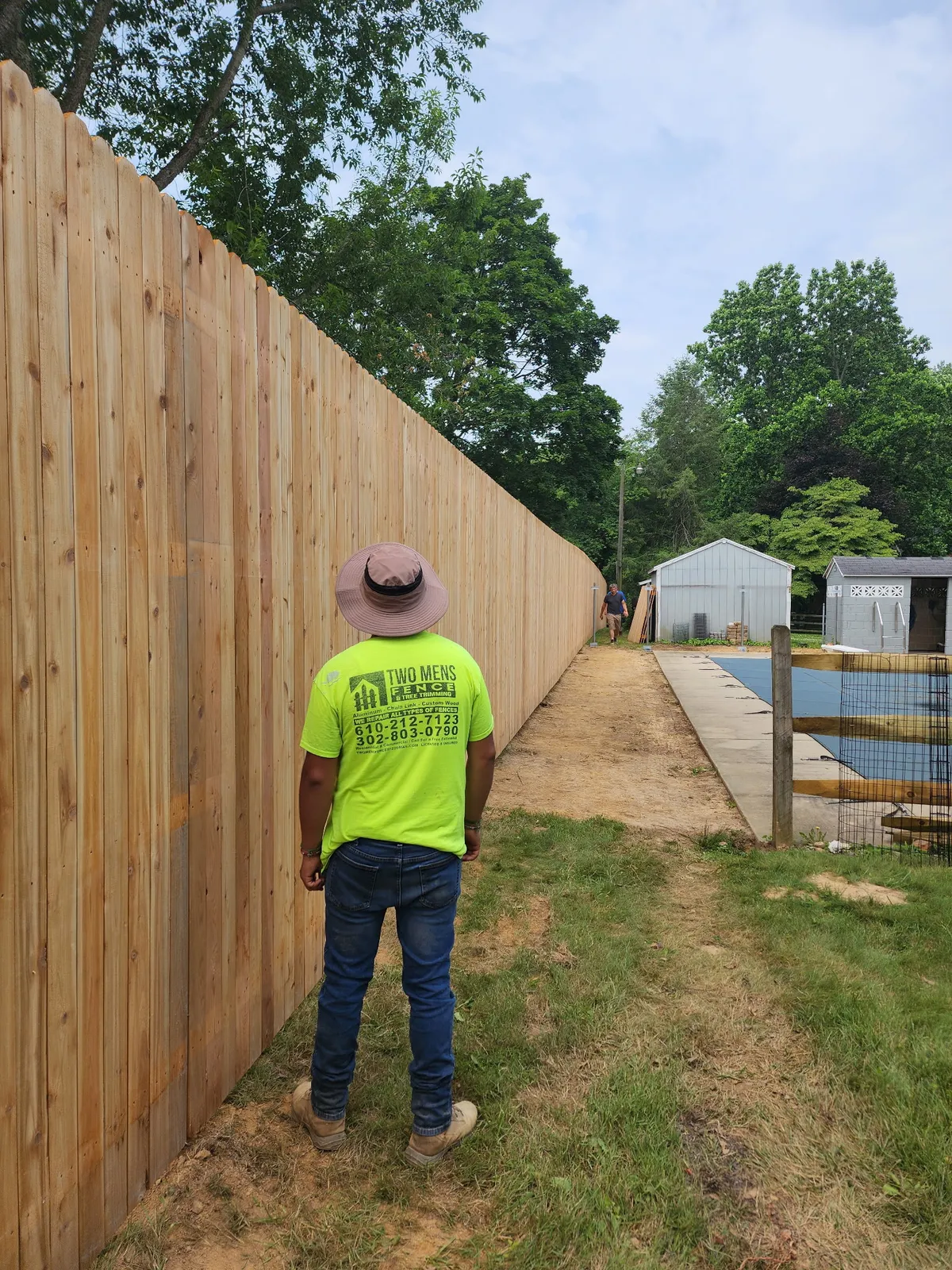
Wood has a natural, warm look that many homeowners love. It can be stained any color and ages into a rustic gray if left untreated. Cedar especially has a beautiful natural grain. The downside: it will weather and change appearance over time unless you stay on top of maintenance.
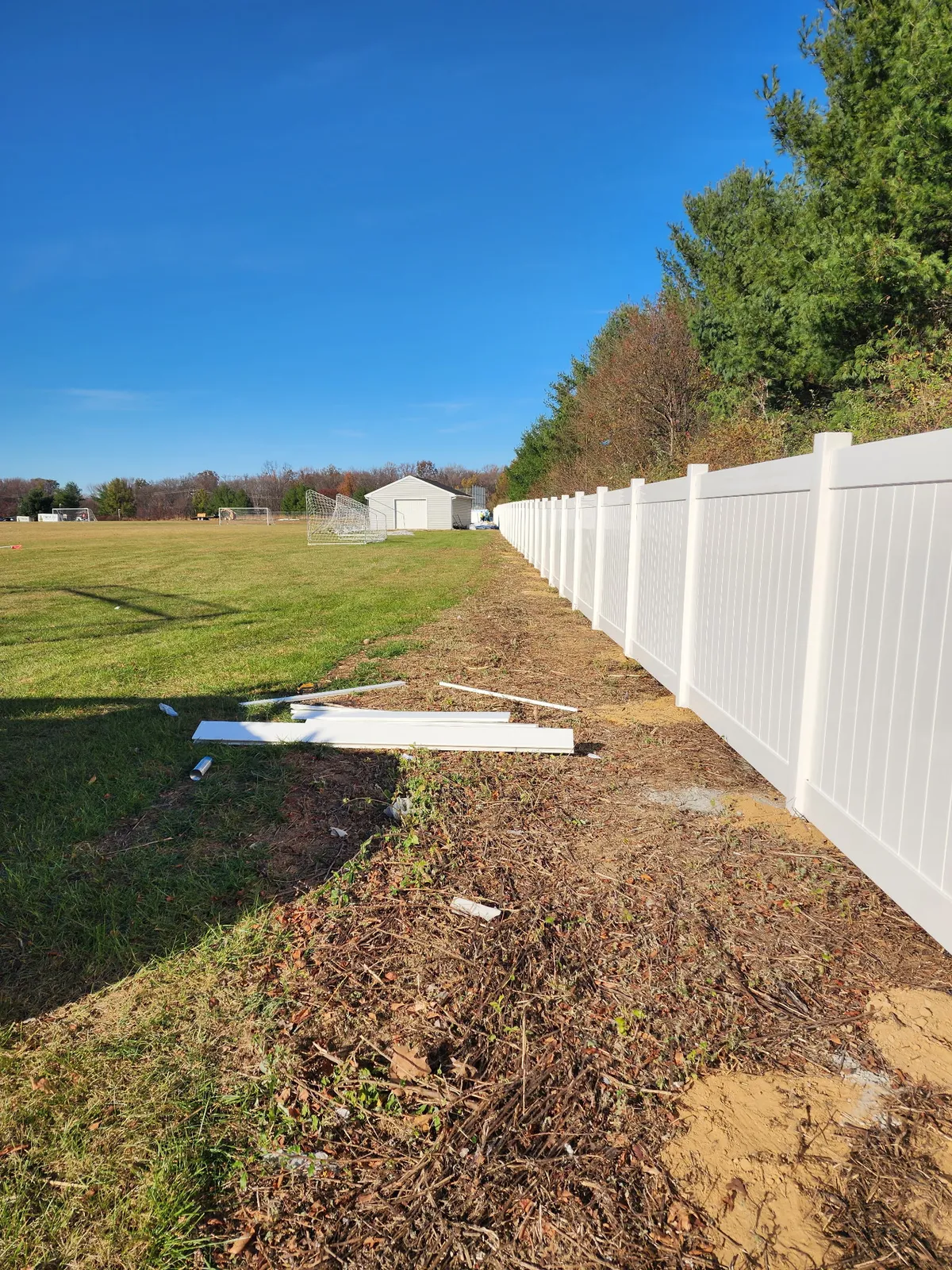
Vinyl keeps its appearance for decades. White vinyl is the most popular, but tan, gray, and wood-grain textures are also available. It won't fade, peel, or discolor. The downside: some people find vinyl looks less "natural" than real wood.
Maintenance
Vinyl wins decisively. A vinyl fence requires almost zero maintenance. Spray it with a hose once or twice a year to remove dirt, and that's it.
Wood requires regular upkeep: staining or sealing every 2–3 years, occasional board replacement, and checking for rot or insect damage. If you skip maintenance, the fence deteriorates faster.
Repairs
Wood is easier to repair. A single broken board can be replaced quickly and cheaply. With vinyl, a damaged panel often means replacing an entire section, which can be more expensive.
That said, vinyl is far less likely to need repairs in the first place. It doesn't crack from moisture, and it's flexible enough to handle moderate impacts.
Wind and Weather Resistance
Both materials hold up well in Delaware's climate. Vinyl is slightly better in extreme weather — it flexes rather than breaking in high winds, and it's impervious to moisture. Wood can handle wind well too, but prolonged moisture exposure causes rot over time.
Our Recommendation
Choose wood if: You want the natural look, you're on a tighter budget, or you don't mind spending a weekend staining your fence every few years.
Choose vinyl if: You want zero maintenance, you're planning to stay in your home long-term, or you want a fence that looks the same in 15 years as it does today.
Both are excellent choices — we install hundreds of each every year. The best fence is the one that fits your property, your budget, and your lifestyle.
Get a Free Quote for Both
Not sure which way to go? We'll give you quotes for both wood and vinyl during your free estimate, so you can compare side by side with real numbers for your property.
Call Oscar at (610) 212-7123 or Anna at (302) 803-0790 to schedule your free estimate.